CQC Registered Clinic
Aesthetics · Non-Surgical
30- 60 min
None needed
None
12-24 months
Overview
Collagen and elastin are what keep skin firm, thick and even. As levels fall with age, sun exposure and past inflammation, skin can become thinner and less elastic, pores can look larger and acne scarring can become more noticeable. Moisturisers and standard hydrating boosters help with dryness, but they don’t do much to rebuild structure.
|
Juvelook is a skin booster developed in South Korea that works differently. Each 50 mg vial combines 42.5 mg of PDLLA (poly-D,L-lactic acid) with 7.5 mg of non-cross-linked hyaluronic acid. The hyaluronic acid hydrates the skin soon after treatment. The PDLLA, a biodegradable material, triggers a gentle, controlled response in the dermis that encourages your own fibroblasts to produce new collagen over the following weeks and months.
Juvelook isn’t a filler. It won’t reshape your cheeks or add projection, and it isn’t used for lips. Its particles are fine enough to be placed close to the surface of the skin, which is why it’s used for texture, pores and delicate areas such as the skin under the eyes, once your practitioner has assessed whether it’s suitable.
The research is still growing, and we’d rather be straight with you about it. One recent prospective study in Aesthetic Plastic Surgery followed 15 patients who had three Juvelook sessions around the tear trough and under-eye area, and concluded it was a potential option for improving under-eye skin elasticity, hydration, quality and radiance. It’s a small study, so we explain what’s known and what isn’t at your consultation, and we never promise a specific outcome.
At Mélo Clinic in Acton, every Juvelook plan starts with a proper consultation. We look at your skin, your scarring or pore concerns and your medical history, then recommend whether Juvelook alone or a combination with treatments such as microneedling or polynucleotides is the better fit.
Juvelook may help with:
How It Works
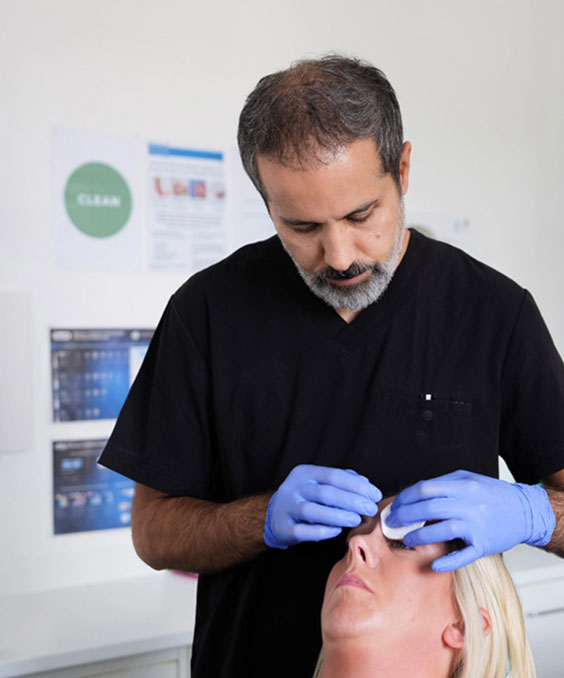
We assess your skin quality, pore size, scarring and medical history, and talk through what you’d like to improve. This is also when we check Juvelook is right and safe for you.
We agree the areas to treat, how many sessions you’re likely to need and how far apart they should be, and whether Juvelook should be combined with another treatment.
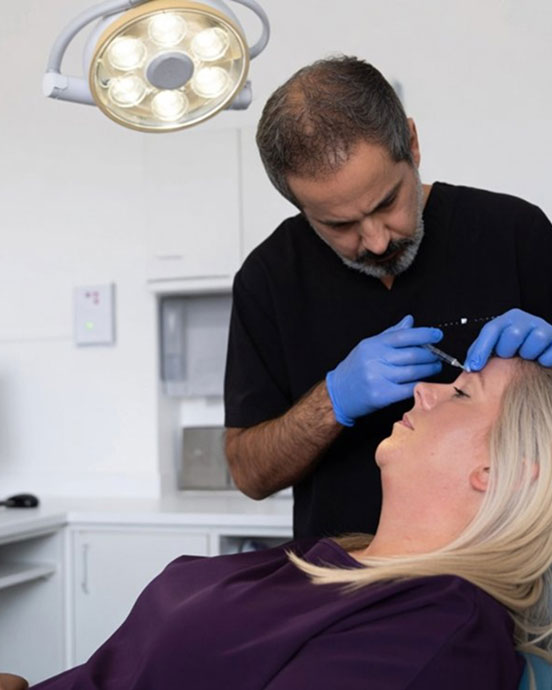
After cleansing the skin, your practitioner places tiny amounts of Juvelook into the dermis using a fine needle or cannula. The technique is chosen to suit the area being treated.
The hyaluronic acid gives early hydration, while the PDLLA builds collagen steadily over the weeks and months that follow. We review your progress and plan top-ups only if you need them.
The Procedure
Dr. Matin Ahmadi
Aesthetic & Dental Clinician
Why Choose Mélo Clinic
Hyaluronic acid for early hydration, plus PDLLA to stimulate your own collagen over time.
Improvement builds slowly, so skin looks better rather than “done”.
Supports firmer, smoother skin and a more even surface.
Fine particles that can be used on thin skin, including under the eyes where appropriate.
Real Results
Aesthetics Case Study 1

FAQ
Juvelook is an injectable skin booster that combines PDLLA (poly-D,L-lactic acid) with non-cross-linked hyaluronic acid. The hyaluronic acid hydrates the skin, while the PDLLA stimulates your own collagen production gradually, improving firmness, texture and skin quality over time.
No. Dermal fillers add volume or shape straight away and gradually break down. Juvelook is a collagen-stimulating skin booster designed to improve skin quality, so it won’t change your facial shape. It isn’t suitable for lip enhancement.
It may help. Placed superficially, Juvelook is used to improve skin density and texture, which can make pores look smaller and some scars look softer. Deeper or tethered scars usually respond best when Juvelook is combined with another treatment, such as microneedling, and your practitioner will advise at your consultation.
Often, yes. Its fine particles make it a popular choice for thin, crepey under-eye skin and mild hollowness, but it isn’t right for everyone. We assess the area carefully first, and we’ll tell you if another approach would suit you better.
Most people have a course of two to three sessions, spaced around four to eight weeks apart, although your plan will be tailored to your skin. Some people then choose occasional maintenance sessions.
Most people find it comfortable. You’ll feel small pinpricks and some pressure, and the area can feel tender for a few days. Numbing cream can be applied beforehand if you’d like it.
Common effects are redness, swelling, tenderness, small bumps and light bruising. Less commonly, firm lumps (nodules) can form, and, rarely, infection or an allergic reaction can occur. Careful assessment, correct product choice and an experienced practitioner reduce these risks, and we explain them fully before you decide to go ahead.
Juvelook isn’t suitable if you’re pregnant or breastfeeding, have an active skin infection or inflammation in the treatment area, or are allergic to PDLLA or hyaluronic acid. Some medical conditions, including certain autoimmune conditions and a tendency towards abnormal scarring, need careful assessment first.
CQC Registered · Treatments performed by qualified practitioners
Acton, West London
Aesthetics & Dental